
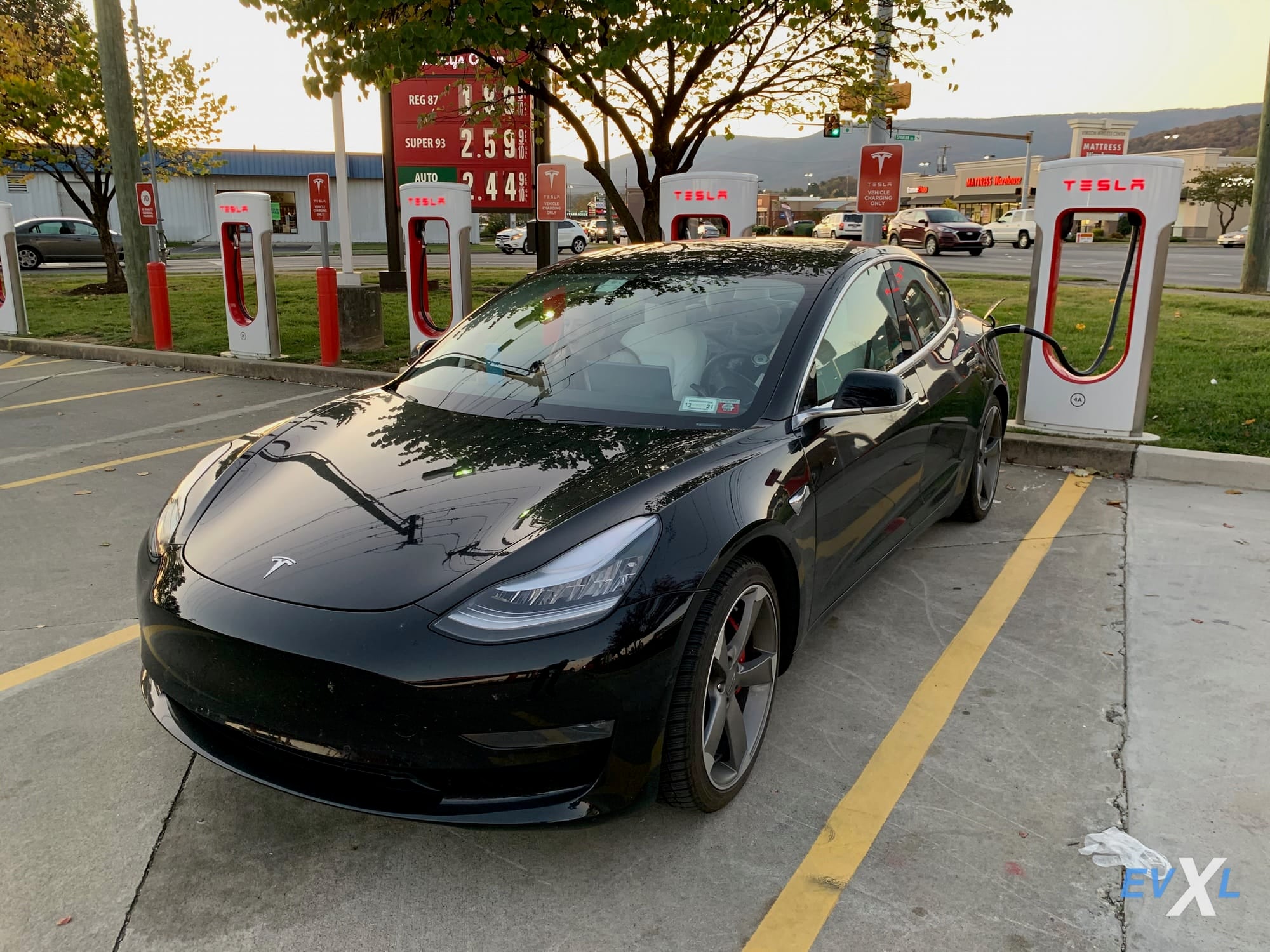
The average electric vehicle still delivers up to 95% of its original range after five years on the road, according to battery-data firm Recurrent, and the highest-mileage cars are making the point hard to ignore. Richard Symons, who runs a used-EV dealership in southern England, has logged 247,000 miles on his five-year-old Tesla Model 3 and recently drove it 260 miles across the country without stopping to charge. “They are proving themselves to be exceptionally reliable,” Symons told The Wall Street Journal in a July 4 report.
That matches what I found in January, when I dug into Geotab’s fleet-scale degradation study covering more than 22,700 vehicles: the batteries are holding up. The buyers are another matter. Fear of a battery replacement remains the number one reason shoppers walk away from an EV, according to a 2025 survey by research firm AutoPacific, and that fear targets a failure that has nearly vanished from modern cars.
Battery Replacements Fell From One In 12 To Three In A Thousand
Roughly one in 12 EVs built between 2011 and 2016 eventually needed a battery replacement, according to Recurrent’s 2025 study, while among vehicles built from 2022 onward the figure so far stands at 0.3%, with both numbers excluding the big Chevrolet Bolt and Hyundai Kona recall campaigns. Part of that drop is youth, since the newest cars have only a few years on them, but the replacements that do occur in recent generations trace to manufacturing defects rather than packs worn down by miles.
The early reputation was earned. Nissan shipped the original Leaf in 2010 without the battery-cooling hardware found in newer EVs, and those packs wore down fast enough to make headlines, as The Wall Street Journal details in its report. Recurrent co-founder and CEO Scott Case argues buyers should have far more confidence in the packs than they currently do, and the academic data backs him. Viet Nguyen-Tien, a research officer at the London School of Economics who studies EVs, finds the newest battery-powered cars have lifespans comparable to combustion vehicles, even when driven more miles.
Perception lags anyway. Jessica Caldwell, head of insights at car-shopping site Edmunds, told the Journal that mass-market consumers still carry real trepidation about the packs. The data changed. The reputation didn’t.
Repair Costs Fall As Packs Become Serviceable
An out-of-warranty battery replacement costs between $5,000 and $16,000 depending on the manufacturer, according to Recurrent, but pack prices have fallen more than 90% since 2010 per a late-2025 BloombergNEF report, and more automakers now design batteries so individual modules can be repaired instead of swapping the whole unit.
That last shift matters more than the sticker range. A repairable pack turns a catastrophic bill into a component job. It is the same direction Thatcham Research pushed in the repairability blueprint we examined in April, after the UK risk-intelligence body found welded-in packs were pushing lightly damaged EVs into write-offs. Serviceability decides whether the rare owner who does suffer a failure pays $16,000 or a fraction of it.
Charging Habits Are The Variable Owners Control
A battery that is frequently fast-charged at high power loses range at roughly twice the rate of one charged at lower power, according to telematics firm Geotab, whose fleet data shows 94.9% capacity retention after 3.5 years for light fast-charging users against 89.7% for heavy ones.
The thresholds are specific. Geotab’s data defines heavy use as DC fast charging on more than 12% of sessions, with 40% of those sessions above 100 kilowatts. Occasional road-trip charging barely registers. Habitual high-power charging is what ages a pack. So does parking for long stretches at 100% or near 0%, and so does sustained extreme heat or cold. Even the heavy-use curve leaves nearly 90% of capacity after 3.5 years, which is the quieter half of the finding.
The Proof Arrived After Washington Stopped Paying Attention
American EV sales are down 25% so far in 2026 compared with last year, according to Motor Intelligence data cited by the Journal, which means the strongest battery-longevity evidence yet is landing in the first full year since the federal purchase incentives expired on September 30, 2025.
Consulting firm AlixPartners still expects the US share of new-car sales to nearly double to 11% by 2030, while EVs already account for 15% of new-car sales globally and are projected to approach a quarter of the world market by decade’s end. The US is the outlier, and the outlier is the market where battery fear polls as the top objection.
The used market is where the two stories collide. Roughly 329,000 EV leases mature in 2026, a wave we flagged in November, and Edmunds data from that coverage showed used EVs already selling in 34 days against 41 for the broader used market. Every one of those returned cars now comes with a longevity record its gas counterpart cannot match.
EVXL’s Take
The battery-fear story was the industry’s own creation. Nissan shipped a pack without cooling in 2010, one in 12 early EVs needed a replacement, and a generation of buyers filed that experience under permanent truths. The record has now been corrected at fleet scale, by Recurrent, by Geotab, and by a dealer in England running a Model 3 past 247,000 miles. The correction landed in the one major market that stopped listening.
Here’s the asymmetry that gets me. A shopper will buy a 120,000-mile gas car on a test drive and a handshake, with zero data on the engine’s internals. A used EV arrives with telemetry receipts on the single most expensive component in the car, and the same shopper discounts it for a failure that now happens 0.3% of the time. Caution doesn’t explain that. A reputation outliving its cause does.
Marketing won’t close that gap. The used market will. Each of the 329,000 lease returns hitting dealerships this year is a rolling proof point with a battery report attached, and used EVs were already outpacing the broader used market on days-to-sell before this data went mainstream. Watch that gap through the rest of 2026. If AutoPacific is right that battery fear is the top objection, used EVs should keep moving faster as the longevity record spreads, even while new-EV demand stays pinned down by the subsidy hangover. The batteries did their job. The proof is sitting on dealer lots, often priced below the gas car parked next to it.
Source: The Wall Street Journal.
EVXL uses automated tools to support research and source retrieval. All reporting and editorial perspectives are by Haye Kesteloo.


