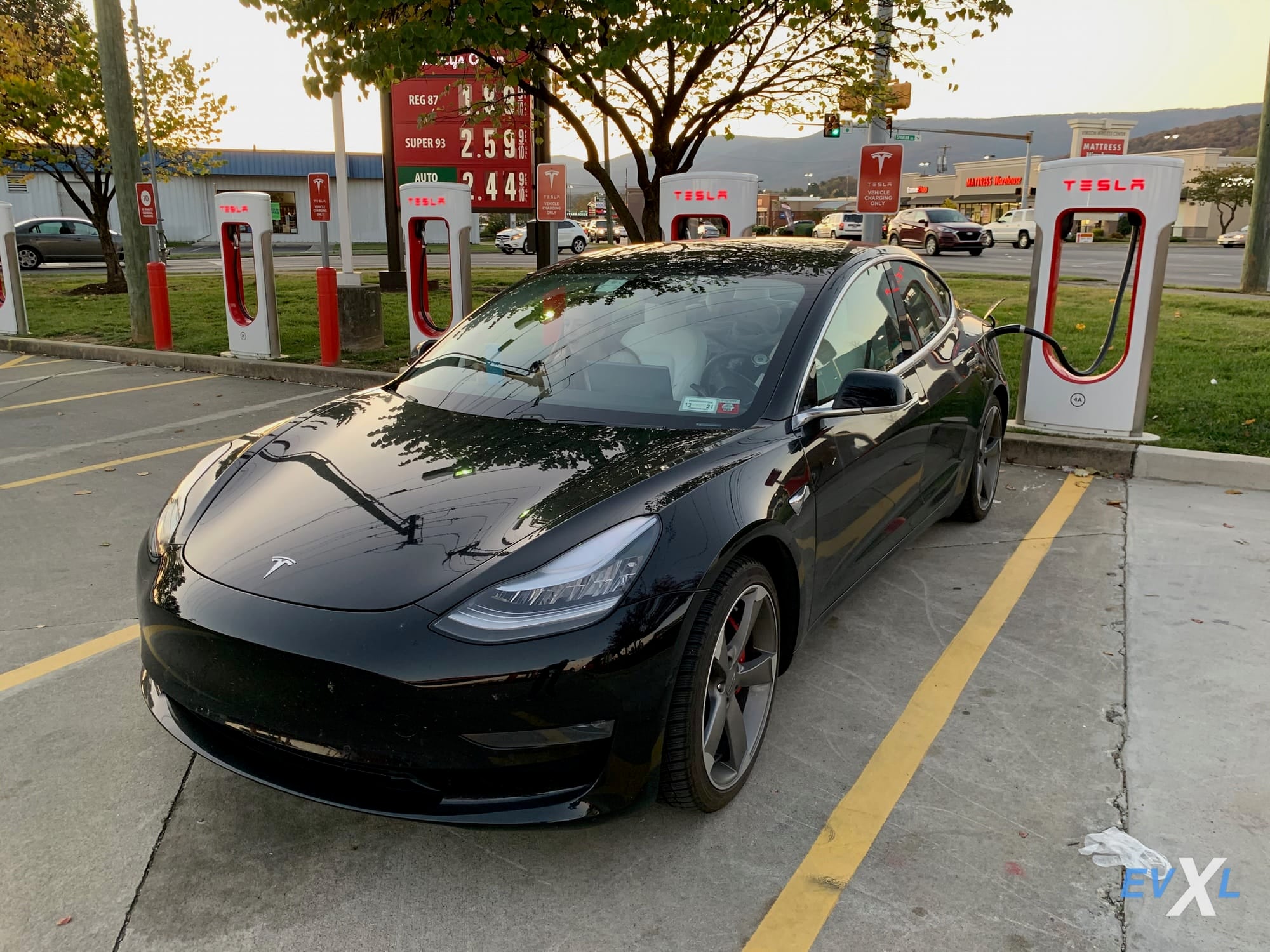

Tesla registered 12,173 new cars in the United Kingdom in June, the brand’s best June on record there and a 58% jump over the 7,719 it managed a year earlier, according to Society of Motor Manufacturers and Traders (SMMT) data published Monday, July 6, 2026. That volume handed Tesla 5.7% of the entire British new car market and 19% of its battery electric segment.
The market around it ran hot too. Britain registered 213,166 new cars last month, up 11.4% and the best June since 2019, while battery electric vehicles claimed a 30% share, their highest of the year. Pump prices sitting near record levels after the conflict in Iran did much of the persuading.
Five days ago, when I wrote up Tesla’s June registrations across the rest of Europe, I flagged Britain as the next test of this recovery. The test came back emphatic.
Tesla Turns Last Year’s 7,719 Into 12,173
Tesla’s 12,173 June registrations work out to 5.7% of the whole UK market and 19% of its battery electric segment, a 58% improvement on the 7,719 cars the company registered in June 2025, when deliveries of the refreshed Model Y had only just begun. The comparison base was soft, and the result still stands on its own.
A year ago, EVXL covered that fragile June 2025 recovery: a single-digit gain that barely papered over a shrinking first half. This June looks different in kind. Registration data compiled by market analyst Roland Pircher shows it was Tesla’s strongest single month in Britain since December 2022, and puts the company’s 2026 volume through June roughly 22% ahead of the same period last year.
New AutoMotive, which draws on a broader registration dataset than the SMMT, counted 12,403 Tesla registrations for the month, a 42% year-over-year gain against its own baseline. The refreshed Model Y and lower-priced Model 3 and Model Y variants fed the number, helped along by a hard quarter-end delivery push.
The British result also slots into a global quarter Tesla badly needed. The company delivered 480,126 vehicles worldwide in the second quarter, up 25% and about 74,000 above Wall Street’s consensus, a beat EVXL broke down last week.
British Buyers Push Electric Cars To 30% While Petrol Slips Under 40%
Battery electric vehicles took 30% of UK registrations in June, their highest monthly share of 2026, while the overall market grew 11.4% to 213,166 units and more than half of all buyers drove home a car with a plug or a hybrid system, per SMMT figures.
New AutoMotive’s Electric Car Count put the month at 64,440 battery electric registrations, up 37.7% and the third-strongest month for EVs on record. Its analysts describe consumer demand that shifted decisively once the Middle East conflict pushed pump prices up, layered on top of the pressure from the ZEV mandate. Petrol’s share of the market fell below 40% for the month and diesel slid to just 8,099 registrations. Plug-in hybrids took 12.5% of the market, with conventional hybrids at 14%.
BYD’s British Sprint Slows To A Jog
BYD registered 2,999 cars in the UK in June, a 9% year-over-year gain that counts as a slowdown after the triple-digit growth the Chinese brand posted through most of 2025, per New AutoMotive, and it left Tesla outselling its closest global rival roughly four to one for the month.
The reversal is stark against recent history. In November, EVXL reported that BYD had overtaken Tesla in the UK on year-to-date registrations, 39,103 to 35,455, after an October in which Tesla managed just 511 cars. Eight months later, Tesla outsold BYD four to one in a single month. One month proves little on its own, and quarter-end always flatters Tesla, but the direction of travel changed.
The ZEV Mandate Fight Now Runs On Two Sets Of Numbers
Year to date, battery electrics hold a record 25% of the British market, short of the 33% headline target the ZEV mandate sets for 2026, and the SMMT says monthly BEV share would need to top 40% for the rest of the year to hit that target outright. The trade body wants the rules reworked.
SMMT chief executive Mike Hawes called June very strong but warned that “even these record levels are still not enough to meet mandated targets.” The organization points to more than £12 billion in manufacturer-funded discounts propping up demand, and its latest Business Leaders Barometer found every surveyed executive believes the UK sits behind the pace required for the mandated 80% zero emission share in 2030.
The other set of numbers tells a calmer story. The mandate’s built-in flexibilities, which grant credits for selling cleaner combustion and hybrid vehicles among other mechanisms, lower the effective 2026 requirement to 24.6%, according to New AutoMotive calculations cited by the Energy and Climate Intelligence Unit. At 25% year to date, the industry is tracking its adjusted obligation even as the headline gap dominates the press releases.
EVXL’s Take
I believe the demand is real. I don’t yet believe it’s Tesla’s to keep. June’s 12,173 rests on a war premium at the pump, a compliance mandate, and a quarter-end delivery push, and none of those levers belongs to Tesla. When I wrote about Tesla’s European June on July 1, I called the recovery real gains on rented foundations. Britain doesn’t change my mind. It just swaps the landlord: France rents Tesla its demand through a subsidy office, Britain through an oil shock.
The pattern worth watching is Tesla’s own calendar. The first month of a quarter is where its UK numbers routinely collapse: 536 cars in April 2025, 511 in October 2025. The SMMT publishes July data on August 5. If Tesla holds anywhere near four figures in a first month, this recovery has legs. If it drops back to triple digits, June was a logistics story.
And a word on the mandate, because the SMMT’s framing deserves pushback. A record EV month and an industry tracking its flexibility-adjusted target read to me like regulation doing exactly what it was designed to do, while manufacturers negotiate in public for a slower lane. British drivers just went 30% electric in a single month. I’d take the win.
Sources: SMMT, New AutoMotive
EVXL uses automated tools to support research and source retrieval. All reporting and editorial perspectives are by Haye Kesteloo.