
General Motors delivered 56,679 electric vehicles in the United States through the first six months of 2026, a 27.5 percent drop from the 78,167 units the same eleven nameplates recorded a year earlier. The company still holds the number two spot among US EV sellers, behind Tesla.
The rest of GM’s business barely flinched. Total sales slipped 4.2 percent in the second quarter to 714,896 vehicles, still enough to lead every US automaker, on the strength of trucks and SUVs.
GM attributes the decline to a smaller EV market, discontinued vehicles, and some inventory constraints. The first item is doing most of the work. This is the first half-year scorecard since the $7,500 federal tax credit expired on September 30, 2025, and the model-level data reads like an autopsy of subsidy-era demand. One of GM’s brands shrugged. Another absorbed nearly the entire hit.
Chevrolet Blazer EV Leads A 44 Percent Slide Across The Carryover Lineup
Seven of the eleven electric nameplates GM sold in the first half of 2025 posted lower deliveries in the first half of 2026, with the Chevrolet Blazer EV falling 75.1 percent and the volume-leading Chevrolet Equinox EV shedding 41.4 percent of its sales. The Blazer’s collapse is the ugliest line in the report: 12,736 deliveries a year ago shrank to 3,166. The GMC Hummer EV pickup and SUV dropped 54.9 percent to 3,601 units. The Chevrolet Silverado EV gave up 32.5 percent. Even Cadillac’s established entries slipped, with the Cadillac Lyriq down 18.7 percent and the Cadillac Escalade IQ off 14.9 percent. The model-level figures below come from GM’s report as compiled by Motor1.
BrightDrop is the asterisk on the declining side. GM ended production of the electric delivery van in October 2025, yet still moved 956 vans this year against 1,592 a year earlier.
Strip out the four models with launch-distorted comparisons and the picture sharpens. The seven carryover nameplates combined for 68,586 deliveries in the first half of 2025 and 38,425 this year, a 44 percent slide. In October 2024, EVXL covered GM celebrating a record 32,095 EVs in a single quarter. GM’s quarterly EV average so far this year sits below that record.
Launch Timing Flatters Three Of The Four Gainers
The Cadillac Optiq, Cadillac Vistiq, Chevrolet Bolt, and GMC Sierra EV were the only GM electric models to grow in the first half of 2026, and three of those comparisons are skewed because the vehicles were barely on sale, or not on sale at all, a year ago. The Bolt’s 3,334 percent jump rests on a base of 123 leftover previous-generation units. The honest number is 4,224 Bolts delivered in six months, a modest start for the cheapest new EV on sale in America.
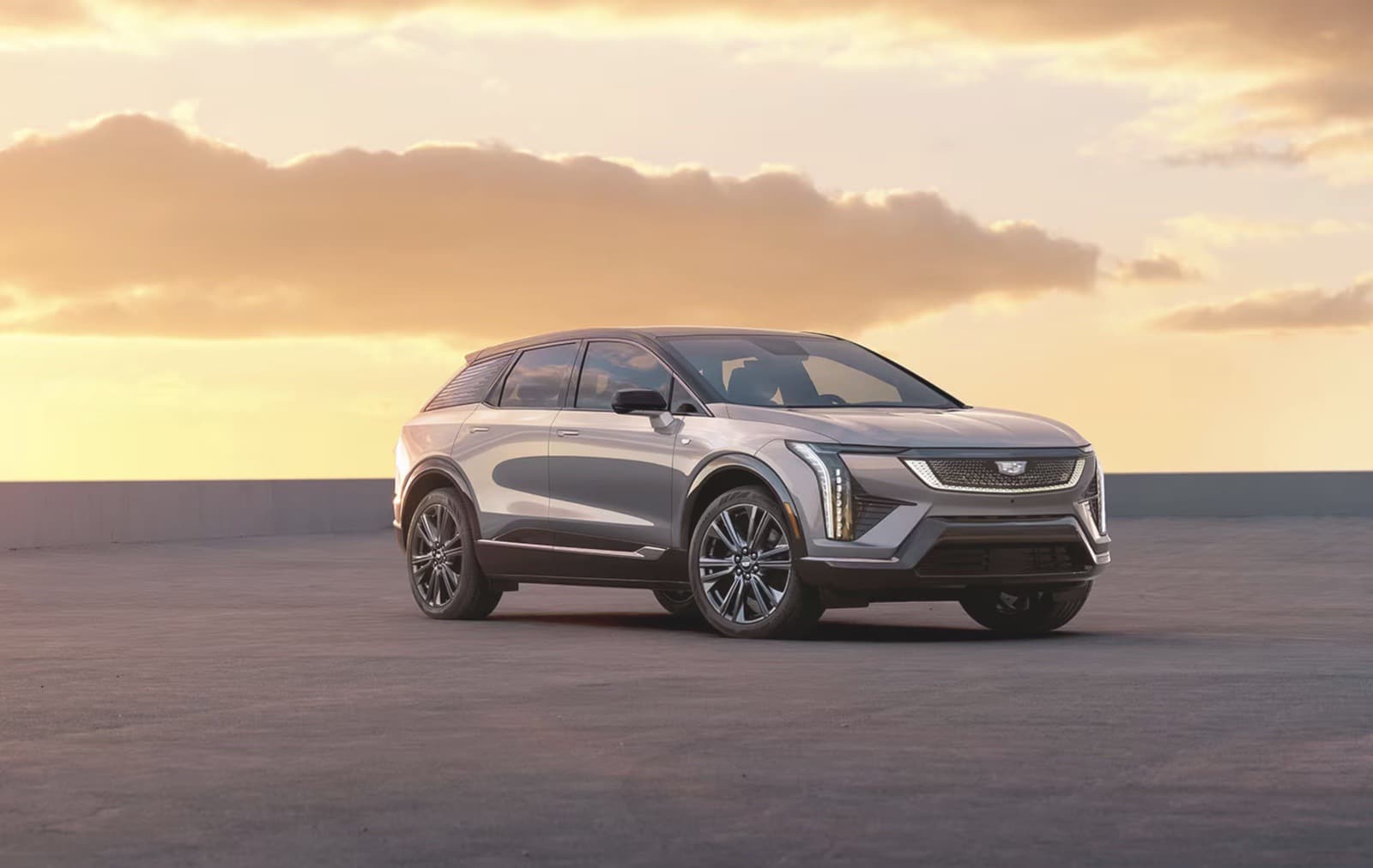
The Vistiq launched in the second quarter of 2025, so its 123.7 percent gain rides a partial-year base of 1,745 units. The Optiq reached US customers in early 2025 and carries the same caveat on its 43.4 percent climb, though 7,083 first-half deliveries now put it within 500 units of the Lyriq. That leaves the Sierra EV as the only clean year-over-year win, up 9.8 percent to 3,044 units. Small, but real.
GM’s own release calls this Cadillac’s best-ever second quarter of EV sales, driven by the Optiq and Vistiq.
The Dead Tax Credit Split GM’s Brands In Two
GM blames a smaller electric vehicle market for the decline, and the September 30, 2025 expiration of the $7,500 federal tax credit explains why the pain concentrates in mainstream Chevrolet showrooms while Cadillac, whose buyers never needed the credit to make the math work, keeps growing. Run the brand math and the divide is stark. Cadillac’s four EVs grew 10.1 percent as a group, from 19,768 units to 21,767. Chevrolet’s four fell 40.7 percent, from 46,047 to 27,311. A $7,500 incentive was a rounding error on an Escalade IQ. On a $35,000 Equinox EV parked ten feet from its gas twin, it was the entire argument.
The wider market gives the same reading. GM told investors its share of the US EV market rose about a percentage point this year, to an estimated 13.5 to 14 percent, which means the overall market contracted faster than GM did. That squares with the Q4 bloodbath EVXL documented in January, when US EV sales fell 36 percent year over year in the first full quarter without the credit.
GM has already paid for the whiplash once, booking $7.6 billion in EV-related charges in January and idling battery plants in Ohio and Tennessee. Customer demand is “resilient, especially for our trucks and SUVs,” GM’s president of North America, Duncan Aldred, said in the release. Nobody at GM is saying that about the Equinox EV right now.
EVXL’s Take
GM’s first-half scorecard is a portrait of what happens when Washington yanks a $7,500 subsidy out from under vehicles that were priced and financed around it: the pain lands exactly where the monthly payment math was tightest, and skips the buyers who never did that math. I want every one of these nameplates to succeed; a GM moving six figures of EVs a year matters more to the transition than any halo car. That’s why I won’t dress it up: demand that only existed at sticker minus $7,500 was borrowed demand, and the bill just came due.
Look at who kept buying. An Optiq shopper cross-shops a BMW and shrugs at $7,500. An Equinox EV shopper cross-shops the gas Equinox in the same showroom, and that $7,500 was the whole conversation.
The Bolt is now the test case for the entire affordable EV question. America’s cheapest new electric car managed 4,224 sales in six months. Watch GM’s third-quarter report in early October: the Bolt will have full production behind it and no launch excuse left. If it can’t clear the 5,111 units the Equinox EV managed in Q4 2025, its worst quarter since the credit died, the problem has moved from the missing incentive to the window sticker itself.
GM built a real EV business between 2023 and 2025. The first half of 2026 shows how much of it stood on a subsidy. The second half shows whether the cars can stand on their own.
Sources: Motor1, General Motors Q2 2026 sales release
EVXL uses automated tools to support research and source retrieval. All reporting and editorial perspectives are by Haye Kesteloo.