

Volvo has revised its ambitious plan to sell only pure electric vehicles (EVs) by 2030, now aiming for 90-100% of its global sales to be electrified cars, including both fully electric and plug-in hybrid vehicles. This adjustment comes amidst slower charging infrastructure rollout, reduced government incentives, market uncertainties, and shifting consumer demand, reports Euro News.
Revised Electrification Goals
Volvo has abandoned its previous plan to go fully electric by 2030, instead targeting 90-100% of its global sales to be electrified cars by that time. This shift allows for a limited number of mild hybrid models to remain in the lineup if necessary.
The company remains committed to electrification, with 26% of its current product lineup consisting of fully electric cars, the highest share among its premium competitors. The total electrified share, including EVs and plug-in hybrids, accounted for 48% of Volvo’s sales in the second quarter of 2024.
Reasons for the Change
Several factors contributed to Volvo’s decision to revise its electrification timeline:
- Slower charging infrastructure rollout: The expansion of charging networks has not kept pace with expectations.
- Reduction in government incentives: Some regions have scaled back financial incentives for EV purchases.
- Market uncertainties: Recent tariffs on electric cars have created additional challenges.
- Consumer demand: There’s growing demand for hybrid vehicles and decreasing affordability of pure electric cars.
Upcoming Electric Vehicles
Volvo still has several electric vehicles in development:
Volvo ES90: This is set to be Volvo’s new flagship electric sedan.
- Official reveal planned for March 2025 in Stockholm, Sweden.
- Expected to be built on the SPA2 platform, shared with the EX90 SUV.
- Likely to offer both single-motor (279 HP) and dual-motor (408 HP) configurations.
- Potential range of up to 700 km (435 miles) due to aerodynamic design and a 111 kWh battery pack.
- Estimated starting price around $65,000 to $75,000.
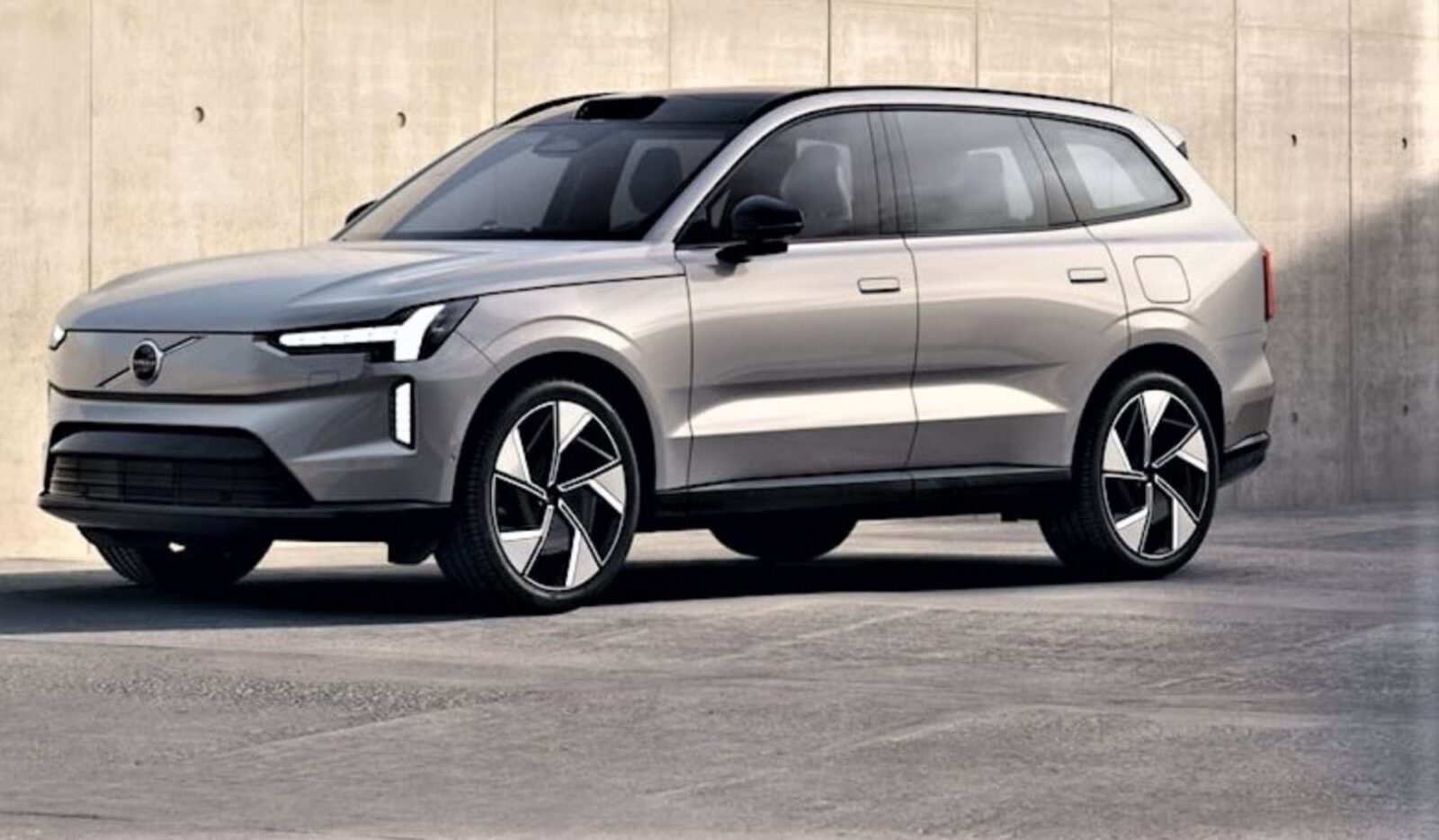
Volvo EX60: A midsize electric SUV planned to replace the best-selling XC60.
- Scheduled for debut in 2025.
- Will be based on an evolution of the SPA2 platform.
- Expected to feature a structural battery pack for improved energy density and handling.
- Potential range of 400 miles.
- May include advanced features like Level 3 autonomous driving capabilities.
Three other unspecified electric models are also in the works, bringing Volvo’s planned EV lineup to five vehicles.
Market Impact
The shift in Volvo’s strategy reflects broader industry trends:
- Other automakers like Renault and Porsche have also scaled back their EV transition timelines.
- The change highlights the challenges facing the automotive industry in transitioning to electric vehicles, including consumer readiness and infrastructure development.
Financial Implications
Volvo’s stock price has been affected by these changes:
- Shares fell by more than 4% following the announcement.
- The company has seen a 12% decline in share value over the past six months.
While Volvo has adjusted its timeline for going fully electric, the company remains committed to electrification and sustainability. The revised strategy allows for more flexibility in meeting consumer demands while still pushing forward with the development of new electric models.
EVXL’s Take
Volvo’s adjustment to its electrification strategy underscores the complexities of the EV transition. Despite the challenges, the company’s commitment to electrification is evident in its upcoming models like the ES90 and EX60. This shift reflects a broader industry trend, as seen with other automakers like Tesla and GM. The future of EVs is promising, and Volvo’s adaptability ensures it remains a key player in the electrified vehicle market.
Photos courtesy of Volvo Cars


