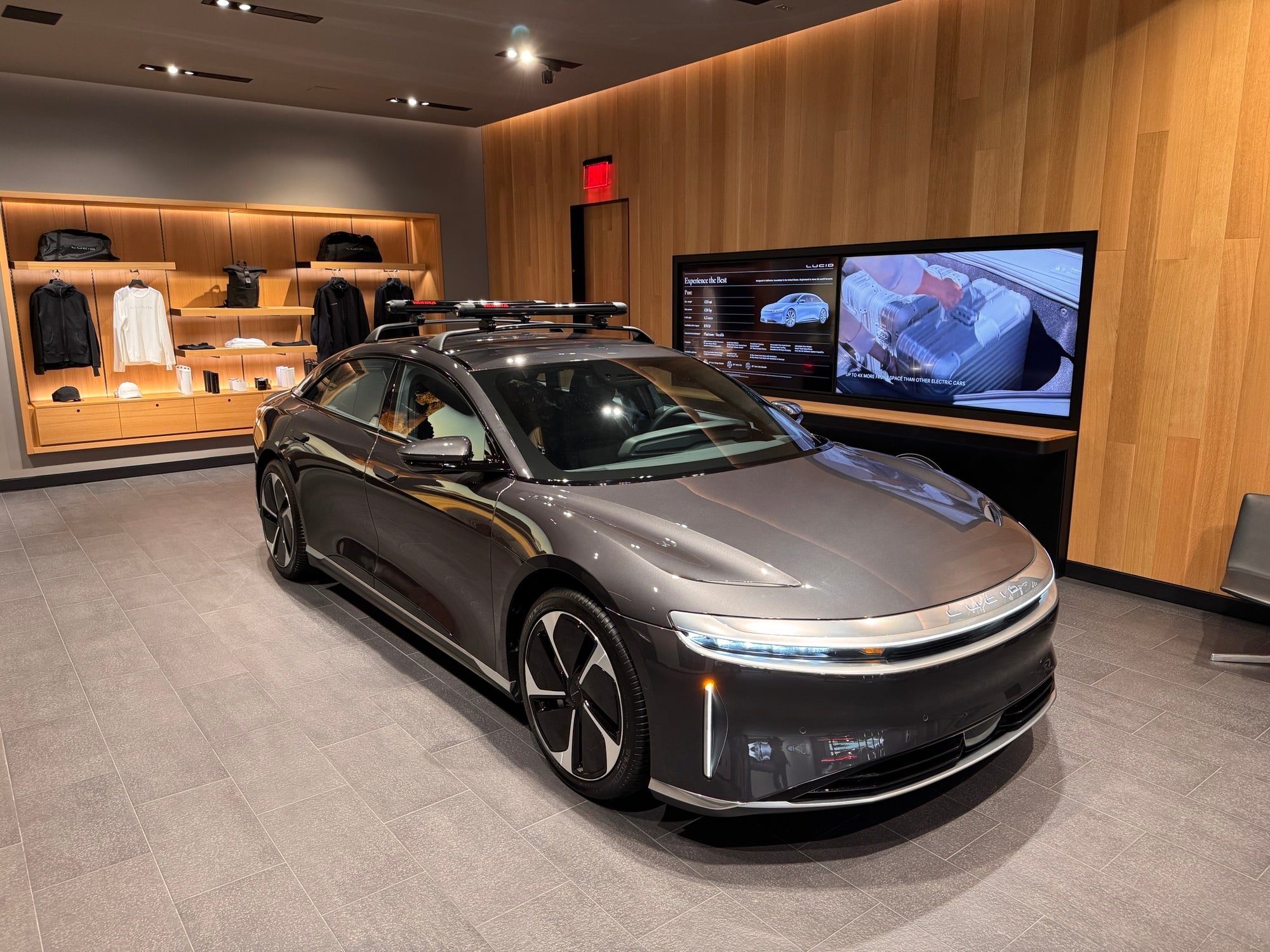
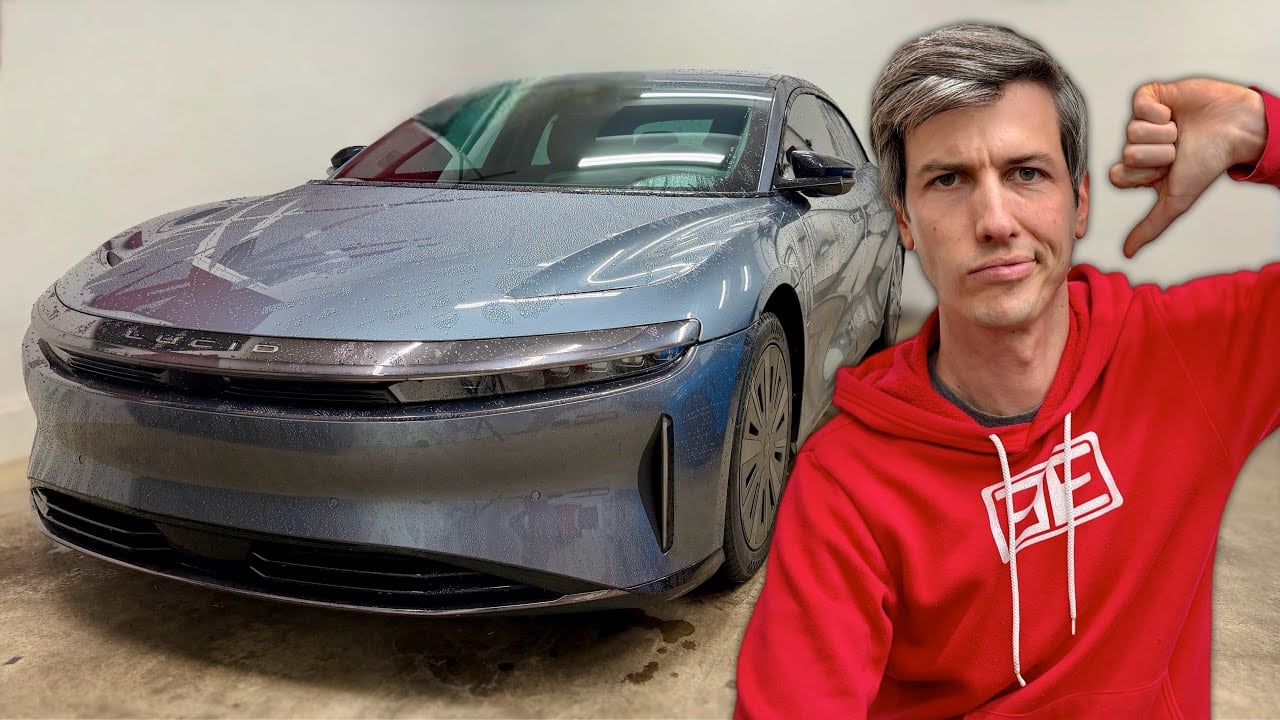
We’ve been covering Lucid‘s struggles all year, from production shortfalls to customer relations crises. Now, one of the most credible voices in automotive engineering is adding his own nightmare to the pile.
Jason Fenske, the mechanical engineer behind the 4-million-subscriber YouTube channel Engineering Explained, just published a devastating ownership report on his 2025 Lucid Air Touring. The verdict? “This car by an enormous margin is the most frustrating vehicle I have ever owned.”
What makes this particularly painful for Lucid is the source. Fenske bought the car specifically because he believes the Air is “one of the best engineered vehicles the world has ever seen.” He’s not a hater. He’s a true believer who’s been burned.
In less than six months and approximately 3,000 miles (4,828 km), Fenske has documented a staggering list of hardware failures, software bugs, and design flaws. Here’s everything that’s gone wrong.
2025 Lucid Air Touring: Key Specs
Hardware Problems: What Broke
Fenske’s Lucid has already required multiple service visits for issues that should have been caught at the factory.
- Frunk failure: The front trunk failed to open on the first attempt every single time. A misaligned striker was eventually fixed by service.
- Coolant pump replacement: Two powertrain coolant pumps couldn’t reach target speed and had to be replaced.
- Broken fan button: The left fan button failed internally and required a complete assembly replacement.
- Charging door requires excessive force: Opening the charging door requires pushing much harder than expected.
- Cup holder grip is absurd: Fenske measured nearly 9 pounds (4 kg) of force required to remove an empty can from the cup holder. His Toyota Corolla? Zero resistance.
Software Glitches: The Never-Ending Bugs
The software problems are relentless. Fenske describes the car as “riddled with software glitches and bugs.”
- Update failure for 3 months: Every time he entered the car, a popup said “unable to install update.” It required a service visit to fix.
- Complete audio failure: The entire audio system, including turn signal sounds, has gone silent at least five times with no warning.
- CarPlay chaos: The system frequently switches which phone is connected to which profile. One factory reset took an hour to redo all settings.
- Phone key hijacking: While Fenske was in his yard listening to AirPods, his wife drove by and the car yanked his phone connection mid-song.
- Phone key failure: His wife’s phone key stopped working entirely, even while the display showed it was connected. Another factory reset required.
- Phantom heated seats: On a 3-hour road trip, the rear heated seat turned on full blast three separate times with no one touching it. His dog was not amused.
- Car won’t lock: After parking, the car refused to lock via app or automatically. It sat unlocked and on for his entire grocery shopping trip.
- Car locks too soon: Sometimes the car locks itself immediately after you close a door, even while you’re standing right next to it.
- Bluetooth won’t enable: CarPlay didn’t work for three full days because Bluetooth refused to turn on, despite the car recognizing his phone as a key.
- Plug and Charge failure: Despite setting up Plug and Charge through the app, Electrify America stations didn’t recognize the car.
- Speed limit display error: The display once showed an 85 mph speed limit in a state where no such limit exists. Actual limit was 55 mph.
- Garage door opener nightmare: Programming required brand new batteries and three different remotes before one worked. Success rate is only about 75%.
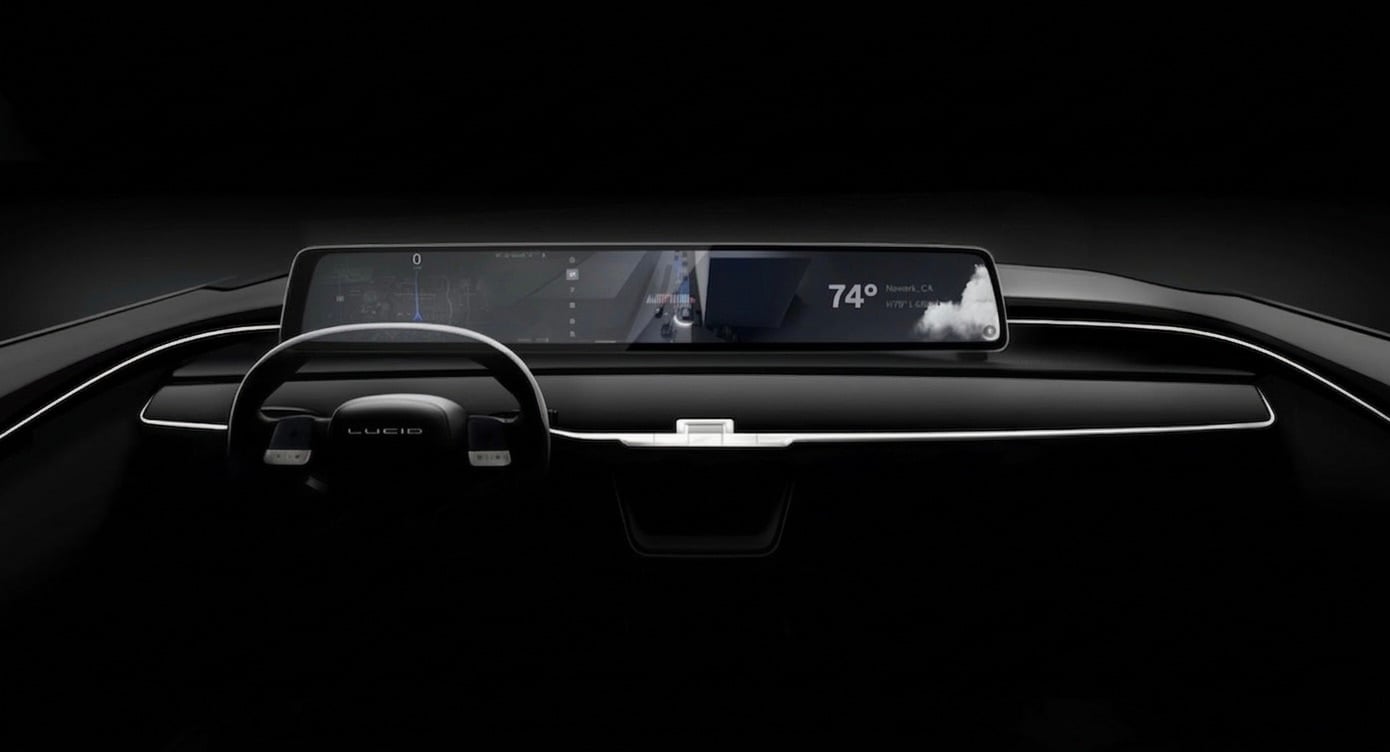
- Screen goes black mid-drive: The entire display went black during a short drive, killing navigation with no way to recover.
- Frozen navigation: The map froze and stayed frozen even after parking, going to dinner, and returning to the car.
Design Flaws: Intentional Choices That Make No Sense
Beyond bugs, Fenske identified several deliberate design decisions that frustrate daily use.
- Profile swap cancels navigation: Switching driver profiles mid-trip deletes your destination and navigation history. You have to re-enter everything.
- Useless reverse mirror tilt: Unlike Tesla, which angles both mirrors down slightly for parking visibility, Lucid only tilts the right mirror, and tilts it so far down it just stares at the ground.
- Range display contradiction: You can select battery percentage display, but navigation still shows arrival charge in miles remaining. Why offer the choice?
- Voice commands are useless: Ask it to navigate somewhere and it directs you to a completely different state. Ask it to open the glove box and it says, “I can’t open the glove box for you, but you can do it by pulling the handle.” There is no handle.
- Overzealous cross-traffic alert: The system warns about cars crossing in front of you even when you’re stopped at a red light.
- Massive battery drain: Keeping the app open for phone-as-key functionality drained 35% of his wife’s iPhone 13 battery in a single day.
The Biggest Problem: You Can’t Switch Profiles While Driving
Fenske’s single biggest complaint illustrates how hardware and software failures compound each other.
Lucid offers two ways to automatically detect the driver: phone key recognition and a biometric face scanner. Neither works reliably.
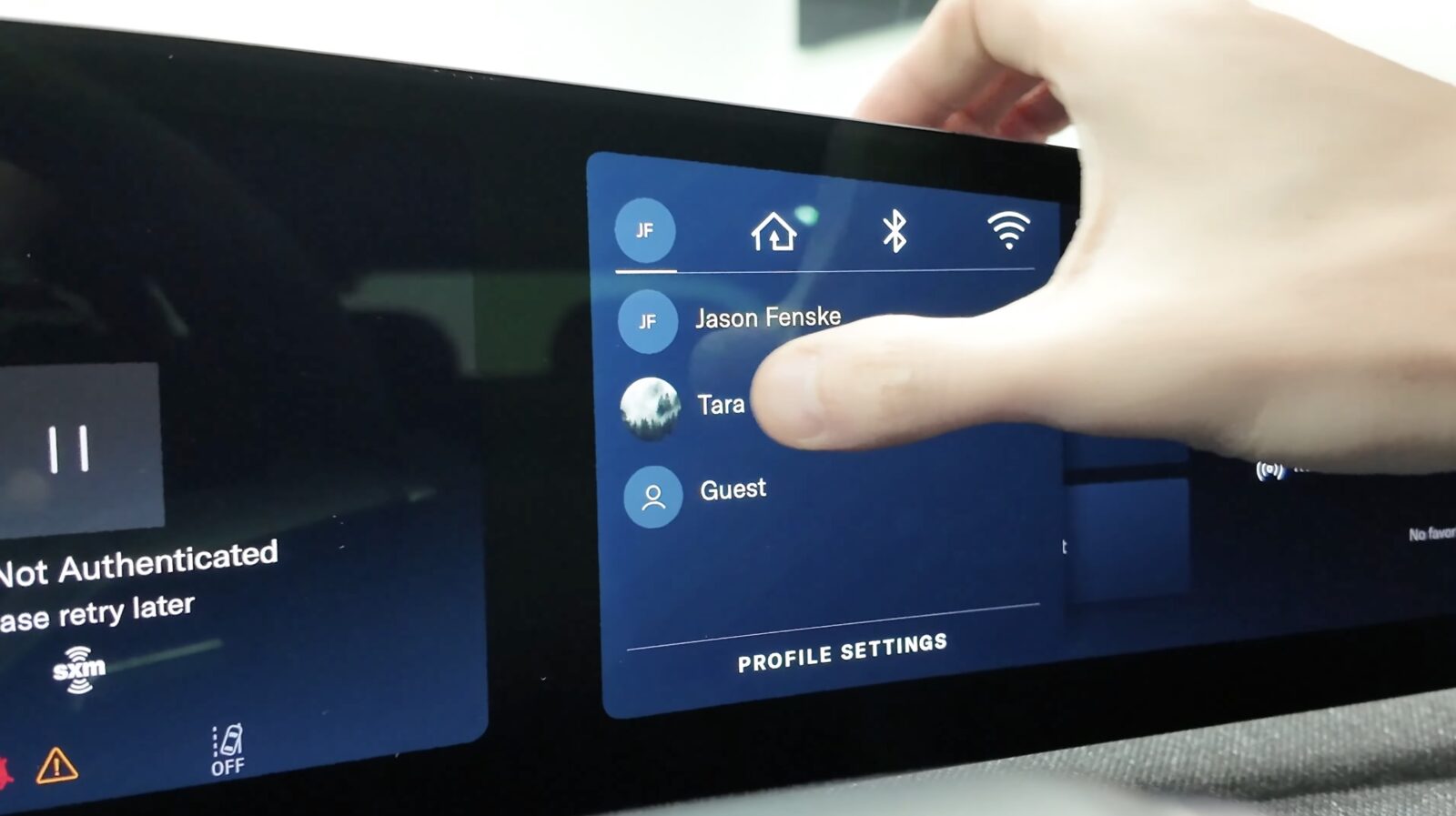
The phone key can’t distinguish which side of the car you’re entering from. If two people approach together, it’s essentially a coin flip whose profile loads.
The face scanner is mounted behind the steering wheel. But Fenske is tall, so he raises the wheel to see the display, which completely blocks the scanner. A hardware design choice renders a software feature worthless.
The result? If you drive off on the wrong profile, you cannot switch while moving. Lucid’s legal department apparently prohibited this because moving the seat back could be dangerous. But the alternative, Fenske points out, is adjusting steering and mirrors through a touchscreen while driving. “That’s the safe alternative,” he says sarcastically.
Worse, even when you manually switch profiles while parked, it sometimes only loads partial settings, mixing seat positions from one profile with mirror settings from another.
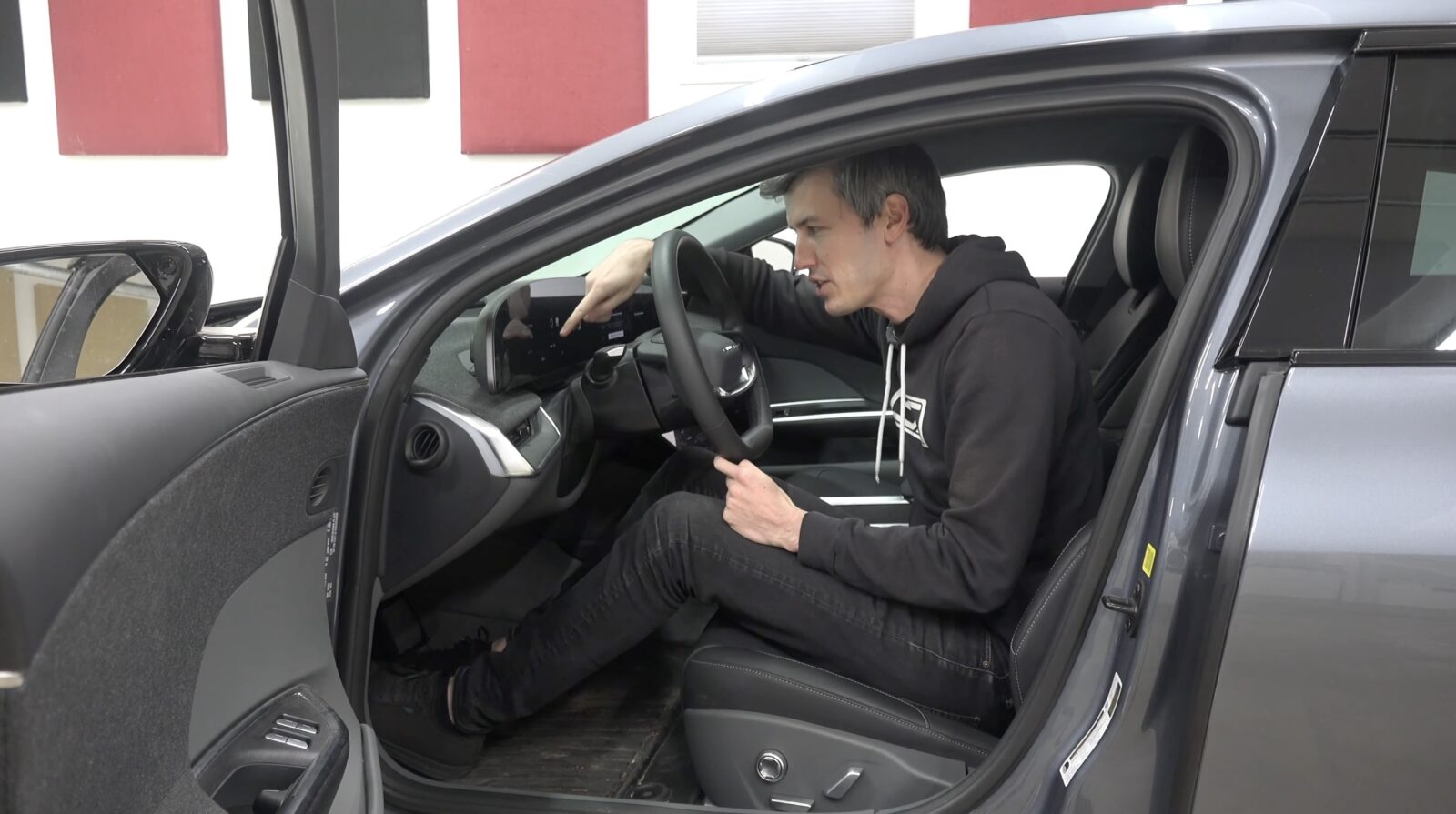
The Latest Software Update Didn’t Help
After finally receiving a software update, Fenske took a 2-mile (3.2 km) drive to drop off his dog. Here’s what happened:
- Driver profile only half-loaded, blocking the display
- Had to park and manually switch profiles twice (took about a minute)
- Profile switching disconnected Apple CarPlay
- Had to reconnect CarPlay
- Screen went completely black half a mile from the destination
- Lost navigation for the remainder of the drive
“This all happened in the course of 2 miles in a car that has been out for about 4 years now,” Fenske says. “There is no reason the software should be this bad this late in its development.”
The Parking Ticket That Proves a Point
In a moment of dark humor, Fenske shares a parking ticket he received. Two details stand out.
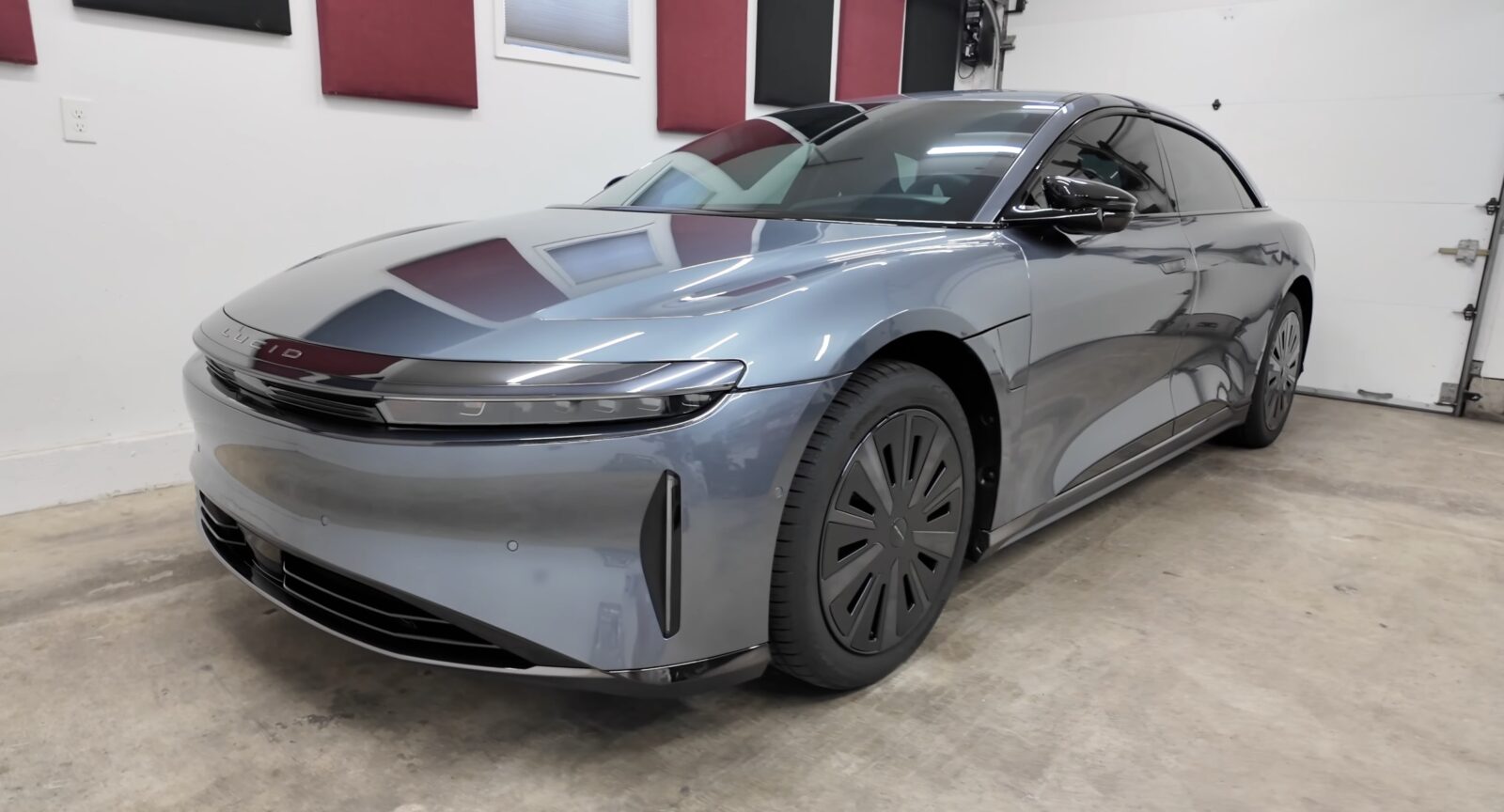
First, the make is listed as “unidentifiable.” Lucid’s brand recognition problem, documented.
Second, Lucid calls his paint color “blue.” The ticket says “gray.” Fenske sides with the parking officer.
EVXL’s Take
This video lands at the worst possible time for Lucid.
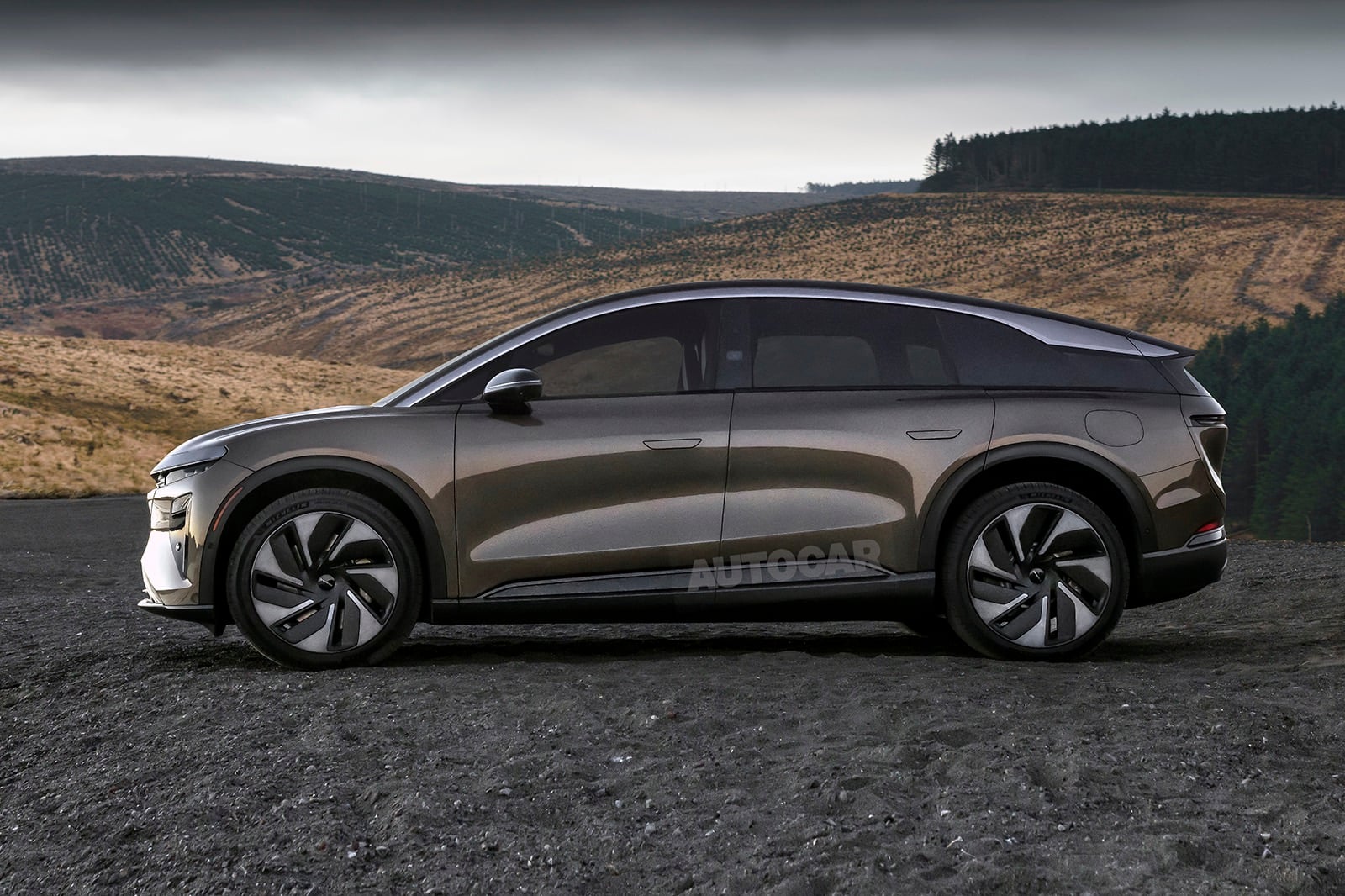
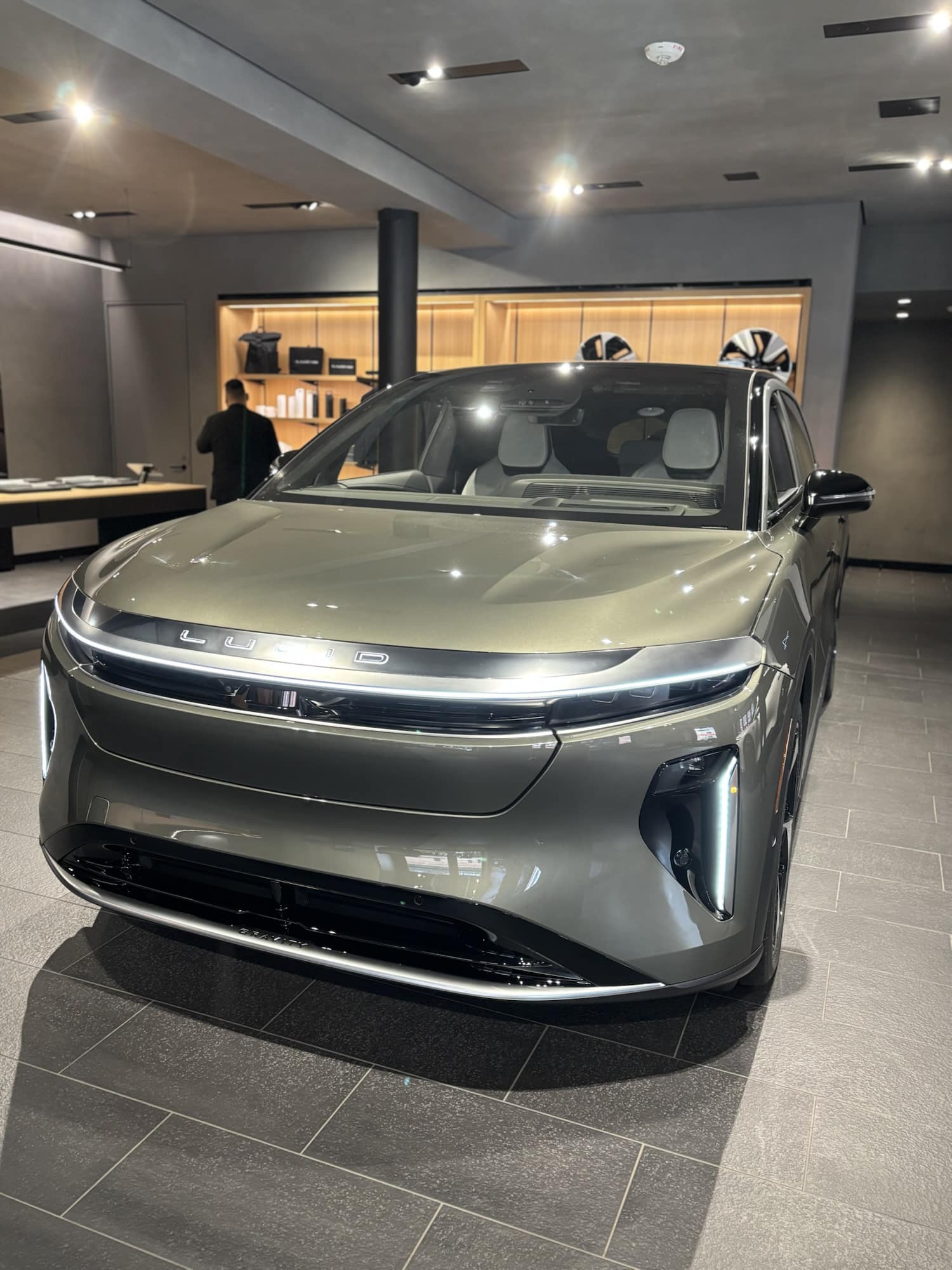
Just two weeks ago, U.S. News named Lucid the Best Luxury EV Brand for 2025, ranking it above Tesla, Porsche, and BMW. The Gravity SUV scored a perfect 10 out of 10. The Air was praised for “mind-blowing acceleration” and “some of the highest ratings for efficiency on the market.”
Now one of YouTube’s most respected automotive engineers, a mechanical engineer who specifically bought the car because he believed in Lucid’s engineering, is cataloging dozens of failures within 3,000 miles.
This pattern is becoming impossible to ignore. We’ve been tracking Lucid’s operational struggles all year. In November, the company slashed its 2025 production forecast to 18,000 vehicles amid what interim CEO Marc Winterhoff called a “Whac-A-Mole” of supply chain disruptions.
The same month, we reported on Lucid facing backlash over $7,600 lease-end bills for minor cosmetic damage, with customers describing a “bureaucratic maze” of third-party inspectors and unclear policies.
Earlier this year, Lucid’s VP of Engineering James Hawkins touted the company’s philosophy of “doing more with less” and building the most efficient EVs on the planet. That engineering excellence is real. The 2025 Air Pure achieves an industry-leading 5 miles per kWh.
But brilliant hardware engineering means nothing if the software makes the car unusable. Fenske’s experience mirrors complaints from Lucid owners across forums: profile switching issues, phone key failures, frozen screens, and audio dropouts.
The comparison to Tesla is inevitable. Tesla has its own quality problems, but its software, for all its controversies, generally works. Lucid is trying to compete with Tesla on hardware while trailing badly on software maturity. That gap is showing.
As Fenske puts it: “I have a cheap Amazon USB stick that turns wired CarPlay into wireless CarPlay. This thing has been bulletproof. Far more reliable than the CarPlay in my Lucid.”
That’s the most damning sentence in the entire video. A $78,900 luxury sedan is being outperformed by a $30 accessory.
Lucid’s survival depends on the upcoming mid-size platform and hitting volume production targets. But volume won’t matter if early adopters like Fenske, people who genuinely want the company to succeed, are documenting ownership nightmares for millions of viewers.
Software can be fixed. The question is whether Lucid can fix it fast enough before its reputation is irreparably damaged.
What do you think? Have you experienced similar issues with your Lucid Air? Share your thoughts in the comments below.