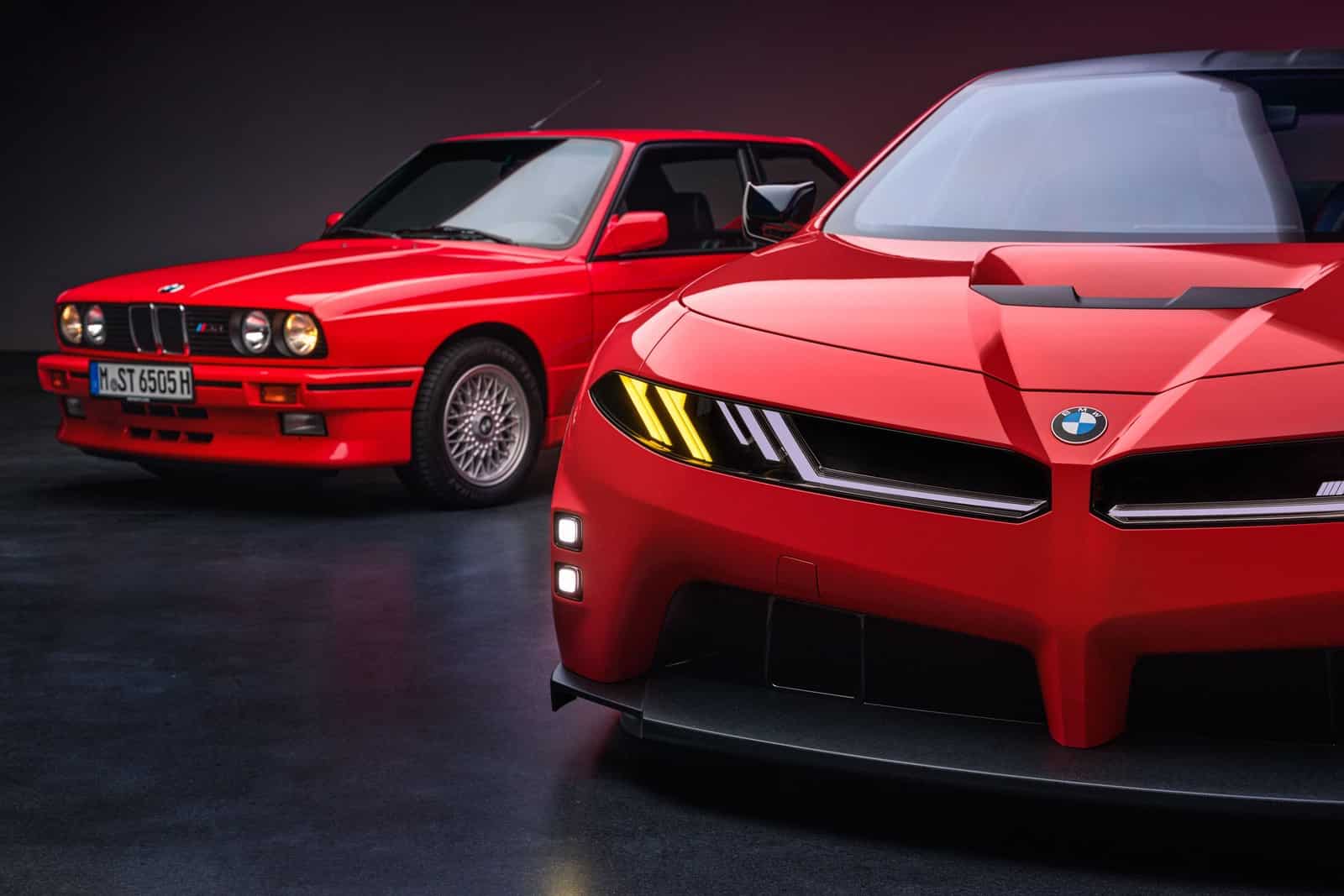

BMW unveiled the all-electric iX5 on June 30, 2026, alongside the rest of its fifth-generation X5 lineup at the company’s “Home of X” event at Plant Spartanburg, South Carolina. The iX5 60 xDrive will be the first fully electric BMW built in the United States, with production at Spartanburg starting later this year and customer orders opening October 8.
BMW rates the iX5 at up to 525 miles of WLTP range in Europe and a preliminary 435 miles on the EPA cycle in the US, a figure BMW has not yet certified. Peak DC fast charging hits 460 kW, adding roughly 217 miles in ten minutes, from a 141-kWh battery built on BMW’s new cylindrical cells. The body wears, for the first time on an X5, a permanently lit kidney grille and door handles with no moving parts.
I covered BMW’s last two Neue Klasse reveals, the iX3 and the i3 sedan, and both followed the same script: strong numbers, a face that split the comment section. The iX5 doesn’t break that pattern.

BMW iX5 Pairs A Bigger Battery With Faster Charging
The BMW iX5 60 xDrive combines a 141-kWh battery with 425 kW (578 horsepower) on an 800-volt platform, reaching 0-100 km/h in 4.6 seconds while charging from 10 to 80 percent in 23 minutes at up to 460 kW, the fastest peak rate BMW has offered on a production model.
- Range: up to 525 miles (WLTP), preliminary 435-mile EPA estimate
- Battery: 141 kWh, sixth-generation cylindrical cells
- Charging: 460 kW peak DC, 23 minutes for a 10-80 percent session
- Power: 425 kW / 578 horsepower, 0-100 km/h in 4.6 seconds
- Towing: 2,700 kg (about 5,952 lbs) braked
That charging number matters as much as the horsepower figure. A ten-minute stop adds about 217 miles, according to BMW’s own global press kit, which would put the iX5 ahead of most three-row electric SUVs on a road trip if real-world testing holds up. BMW’s US materials put the iX5’s usable battery at 144 kWh, more than 25 percent larger than the 112.2-kWh pack in the smaller iX3, the largest battery BMW has ever fitted to a production car.
Unlike the iX3 and i3, which ride on BMW’s dedicated Neue Klasse EV platform, the iX5 uses an updated version of the combustion-era CLAR architecture also shared by the gas and plug-in hybrid X5 variants.
Pricing starts at $81,250 including destination, about $7,700 more than the gas-powered X5 40 xDrive. Towing capacity lands at 2,700 kg braked, helped by standard adaptive air suspension and an optional rear-axle steering system that turns the back wheels up to 3.2 degrees.

BMW’s Illuminated Grille Returns, And So Does The Backlash
The iX5 carries over the vertically aligned, permanently lit kidney grille and the new “double-X” headlight graphic that BMW introduced on the iX3 and the i3 sedan (a nameplate BMW revived for this unrelated new model after retiring its 2013-2022 electric hatchback of the same name), the same design language that drew sharp criticism from automotive press on both of those cars.
Frank Stephenson, who designed the original E53-generation BMW X5, reviewed the iX3’s grille for Top Gear and didn’t hold back, calling it “too pinched, almost puckered up.” He found the rear styling forgettable and closed his review wishing BMW better luck next time, a mixed verdict from one of the few critics qualified to judge how an X5 should look. New Atlas was tougher still, arguing the iX3’s front end never resolved into a single coherent design.
The i3 sedan landed worse online than the iX3 did. Outlets covering its reveal described a reaction split severe enough to draw comparisons to BMW’s last bout of polarizing design two decades ago. BMW has not walked back the look since. Designers and executives addressed the criticism directly in interviews after both reveals, and the iX5 arrives with the identical grille and lighting signature, stretched across a bigger SUV. The headlights combine low beams, daytime running lights, side lights, and turn signals into a single element for the first time on a BMW, with adaptive matrix high beams rated to reach 600 meters.

The Winglet Door Handles Have No Moving Parts
BMW replaced the iX5’s exterior door handles with what it calls BMW Winglets, fixed, recessed paddles built into the B- and C-pillars in gloss black that respond to a light touch instead of folding, popping, or retracting like handles on most other modern EVs.
A light touch opens the optional powered doors, a firmer press closes them, and holding the front edge of the Winglet for about a second locks the car. T3 pointed out the practical upside: a fixed handle can’t freeze shut in cold weather the way pop-out handles sometimes do. Motor1 was less convinced the design improves aerodynamics over the pop-out handles it replaces, and noted BMW is unlikely to offer a conventional handle as an alternative. The Autopian called the approach the biggest styling departure of any X5 generation, putting the Winglets in the same category as the door handles on the Volvo EX60 and Ford Mustang Mach-E. No outlet has published a cold-weather or long-term reliability test yet. That verdict is still months away.

Spartanburg Becomes BMW’s First US Electric Vehicle Plant
BMW confirmed at the Spartanburg event that it has completed a $1.7 billion investment in South Carolina, split between $1 billion to convert Plant Spartanburg for electric vehicle production and $700 million to build a new battery assembly plant in nearby Woodruff.
The iX5 will be the first fully electric BMW assembled in the United States, with Spartanburg production starting in August and the iX5 specifically arriving in the first quarter of 2027. BMW of North America CEO Sebastian Mackensen said “innovation and customer choice go hand in hand,” pointing to the plant’s ability to build gas, diesel, plug-in hybrid, and electric versions of the X5 on a single line, according to BMW’s investment announcement. Plant Woodruff will assemble battery packs using cells from Envision AESC’s Florence County, South Carolina factory, a project the supplier paused construction on in June 2025 citing policy and market uncertainty, after already investing more than $1 billion toward an eventual $1.6 billion target.

EVXL’s Take
The iX5 still isn’t on BMW’s dedicated EV platform, and that’s the detail buried under all the spec-sheet numbers. The iX3 and i3 ride on the Neue Klasse architecture, built from the ground up for batteries and motors. The iX5 doesn’t. It uses an updated version of BMW’s combustion-era CLAR platform, the same bones underneath the gas and plug-in hybrid X5s. That’s why it needs a 141-kWh battery, the biggest BMW has ever built into a production car, to hit a range number the smaller, purpose-built iX3 gets close to with a much smaller pack.
I’m not against the engineering. A 460 kW peak charge rate and 217 miles in ten minutes are real numbers, and BMW earned them. But “Neue Klasse” has become a marketing umbrella as much as an architecture, and the iX5 is proof. The badge says new era. The platform says compromise.
Watch the EPA-certified number when it lands ahead of early-2027 deliveries. BMW’s own preliminary US estimate of 435 miles already trails the European WLTP rating of 525 miles by 90 miles, a wider gap than EPA-versus-WLTP usually produces. If that gap holds or grows once testing is final, it’s a sign the iX5 is using battery size to cover for a platform that wasn’t built for this from the start.
Sources: BMW Group press release and “Home of X” investment announcement.
EVXL uses automated tools to support research and source retrieval. All reporting and editorial perspectives are by Haye Kesteloo.